In the Time of Dandelions

May 13
2 min read
Spring is an intoxicating, enchanting season.
At last there is fresh forage to enjoy. At last the fields offer that incomparable feeling of freedom beneath open skies.
What was only weeks ago a monochrome landscape now bursts into green. The pastures shimmer with new life, dotted with the cheerful yellow sparks of dandelions. And oh, how they taste.

What must it have felt like for a small foal to step onto the spring pasture for the very first time?
Everything is new — the soft grass under unsteady hooves, the dancing light, the curious scents carried by the breeze. The world suddenly feels wide and inviting.
And yet, there is no need for fear. Mother is there.
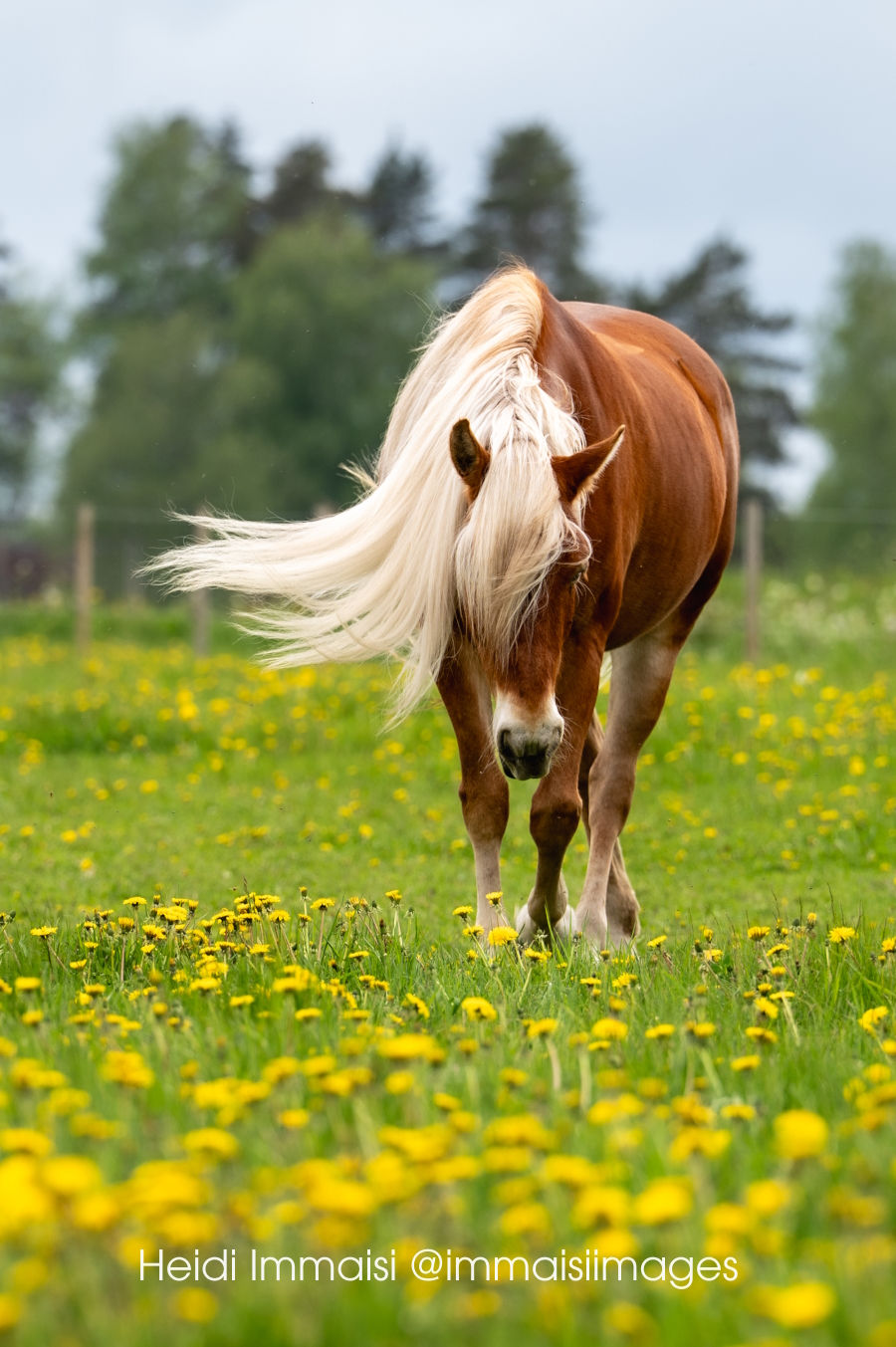
Which one would you taste first? The brightest dandelion, glowing like a little sun?
The freshest blade of grass, still cool from the morning dew?
Or perhaps a curious nibble of everything, just to be sure?

Even when nature turns brilliantly green, spring weather can still be surprisingly cold and rainy. The wind sneaks under thick coats, and raindrops cling stubbornly to whiskers.
But at the pasture’s generous buffet there is always comfort food to be found,
a feast that makes even a grey day feel lighter.
At least Shetland pony Sissi seems quite pleased with the arrangement. Rain or shine, she knows exactly where to find the best bites — and she enjoys every single one of them.

In the golden light of the evening sun, it is lovely to wander out to the pasture one more time,
just to make sure everything is well. The day settles softly; the horses graze peacefully,
tails swishing in slow rhythm.
Photos Heidi Immaisi

Horsehair bracelet Puella Did you know this about dandelions? The dandelion (Taraxacum officinale) is a highly nutritious and versatile natural food source
for horses and ponies. It is quite remarkable that growing foals have access to such
abundance during the spring season.
Dandelion is known to support digestion and is traditionally valued for its gentle influence on liver and kidney function, which in turn supports the body’s natural processes of eliminating waste products.
The leaves are particularly rich in minerals, especially calcium, potassium, and magnesium — in some cases even in higher amounts than traditional timothy hay. This is worth keeping in mind when balancing other supplements in the diet.


Comments